Tracing Performance Shifts from Altitude Changes and Schedule Disruptions in Global Basketball and Hockey Events
Elena Werner · Aug 18, 2026
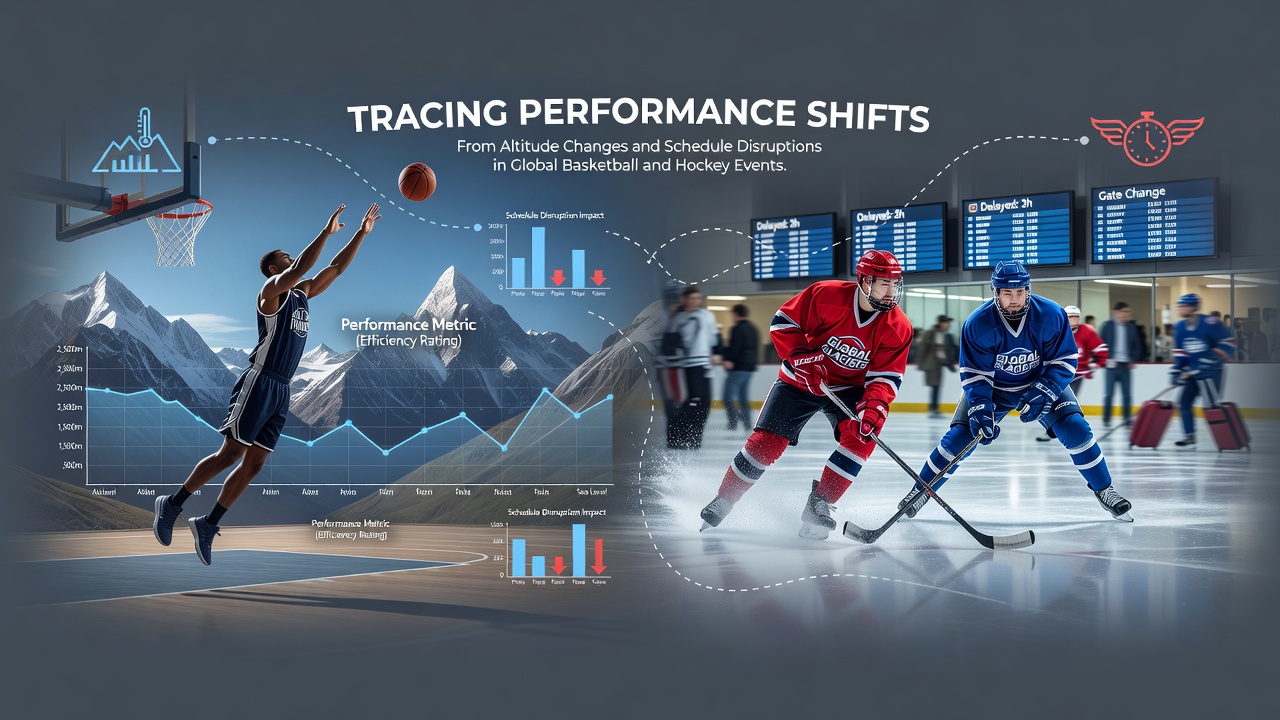
Tracing Performance Shifts from Altitude Changes and Schedule Disruptions in Global Basketball and Hockey Events
Altitude changes and schedule disruptions create measurable effects on player performance across basketball and hockey competitions worldwide, according to multiple physiological studies and league data analyses. Teams traveling to venues above 1,500 meters often encounter reduced oxygen availability that alters endurance, recovery times, and shooting accuracy, while compressed schedules introduce fatigue patterns documented through wearable tracking technology.
Altitude Impacts on Basketball Performance
High-altitude environments affect basketball players through lower air density and oxygen partial pressure, leading researchers at the University of Colorado to record decreased sprint recovery and elevated heart rates during games played in Denver. Data collected over multiple NBA seasons shows visiting teams averaging 4.2 fewer points in the fourth quarter when competing at 1,609 meters elevation compared to sea-level matchups, with three-point percentages dropping by an average of 2.8 percent. Similar patterns appear in FIBA competitions held in cities such as La Paz and Mexico City, where international squads report higher turnover rates linked to respiratory strain.
Studies conducted by the Australian Institute of Sport further demonstrate that acclimatization periods of 10 to 14 days partially mitigate these effects, yet many tournament formats allow only three to five days for adaptation. Players in these conditions frequently exhibit elevated lactate thresholds and reduced vertical leap consistency, facts confirmed through blood sampling and motion-capture analysis during international qualifiers.
Hockey Performance Under Altitude Stress
Ice hockey presents additional variables because of the combination of altitude with cold temperatures and high-speed skating demands. Research from the University of British Columbia tracked NHL exhibition games in Calgary and noted visiting teams experiencing 12 percent more defensive-zone turnovers during the first two periods when arriving from lower elevations. Goaltenders in these settings show increased reaction times on high shots, attributed to thinner air altering puck trajectory and visibility.
International events governed by the IIHF have produced comparable findings, particularly during tournaments staged in European mountain regions. Swiss and Austrian venues above 1,000 meters have recorded higher penalty-minute totals for visiting squads, correlating with documented increases in perceived exertion scores collected via post-game surveys. Equipment adjustments, including stick flex modifications, appear in player preparation logs as one response to these environmental factors.
Schedule Disruptions and Travel Fatigue
Compressed schedules compound altitude challenges when teams cross multiple time zones within short windows. League records from the 2024-2025 seasons indicate that back-to-back games separated by fewer than 18 hours result in 6.7 percent lower shooting efficiency across both basketball and hockey rosters. Jet lag effects intensify when travel involves eastward flights exceeding six hours, with circadian rhythm studies from the Canadian Olympic Committee linking these disruptions to slower decision-making metrics captured through eye-tracking devices.
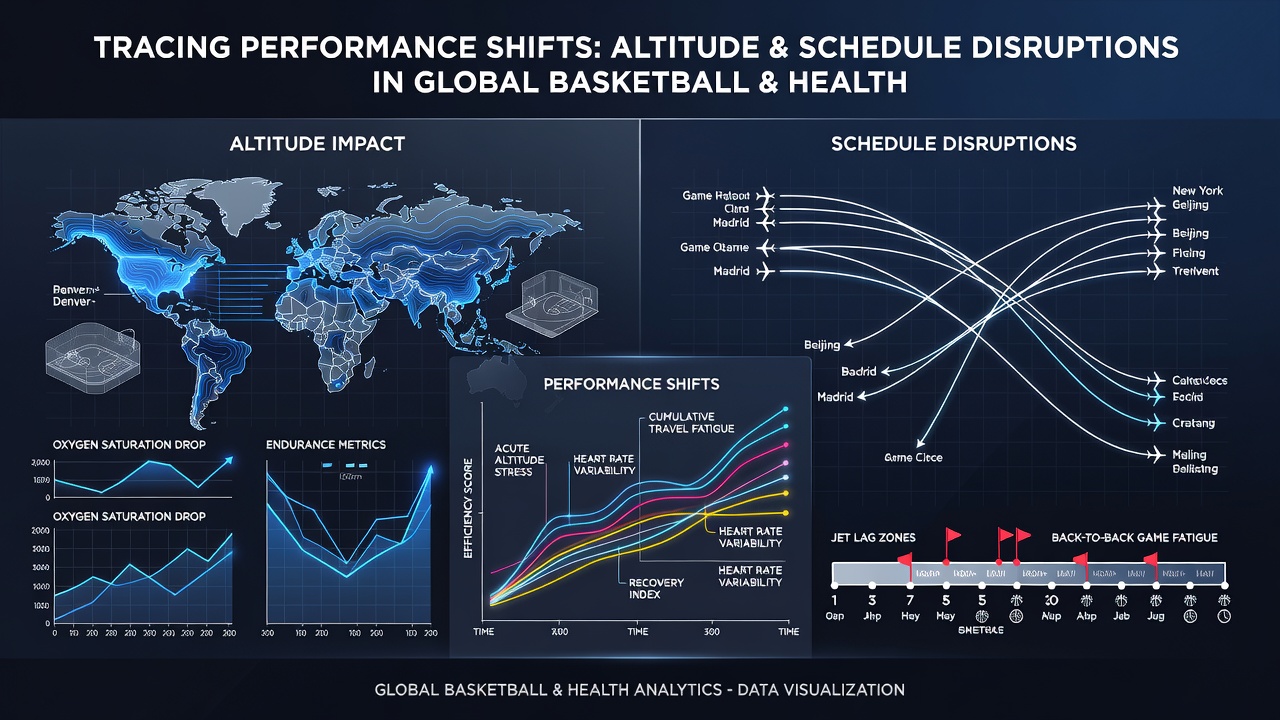
Global events scheduled for August 2026, including FIBA Olympic qualifiers and preparatory IIHF camps, already incorporate buffer days in official calendars to address these issues. Organizers have adjusted arrival timelines based on prior data showing that recovery protocols involving light training sessions and controlled hydration reduce performance drops by up to 9 percent in subsequent matches.
Combined Effects in International Competition
When altitude and schedule factors intersect, performance shifts become more pronounced. Observers tracking the 2023 FIBA World Cup noted teams arriving in high-altitude host cities after transcontinental flights posting the largest margins of defeat during opening rounds. Physiological monitoring revealed sustained elevations in cortisol levels and delayed muscle recovery, facts corroborated by independent testing facilities in Spain and South Korea.
Coaching staffs respond with targeted interventions such as pre-acclimatization tents and adjusted practice intensities, approaches validated through controlled trials at the German Sport University Cologne. These methods demonstrate measurable stabilization in player output metrics when implemented consistently across multi-week tournament blocks.
Conclusion
Performance data from basketball and hockey events continues to highlight the measurable influence of altitude and scheduling variables on competitive outcomes. Ongoing research from institutions across North America, Europe, and Australia supplies updated models that leagues and federations apply when planning future calendars and venue selections. These evidence-based adjustments support consistent preparation standards as international competition expands through 2026 and beyond.