Examining Recovery Timelines and Their Effects on Outcomes Across NBA Playoffs, IIHF Championships, and Champions League Knockout Stages
Ulrich Werner · Aug 20, 2026
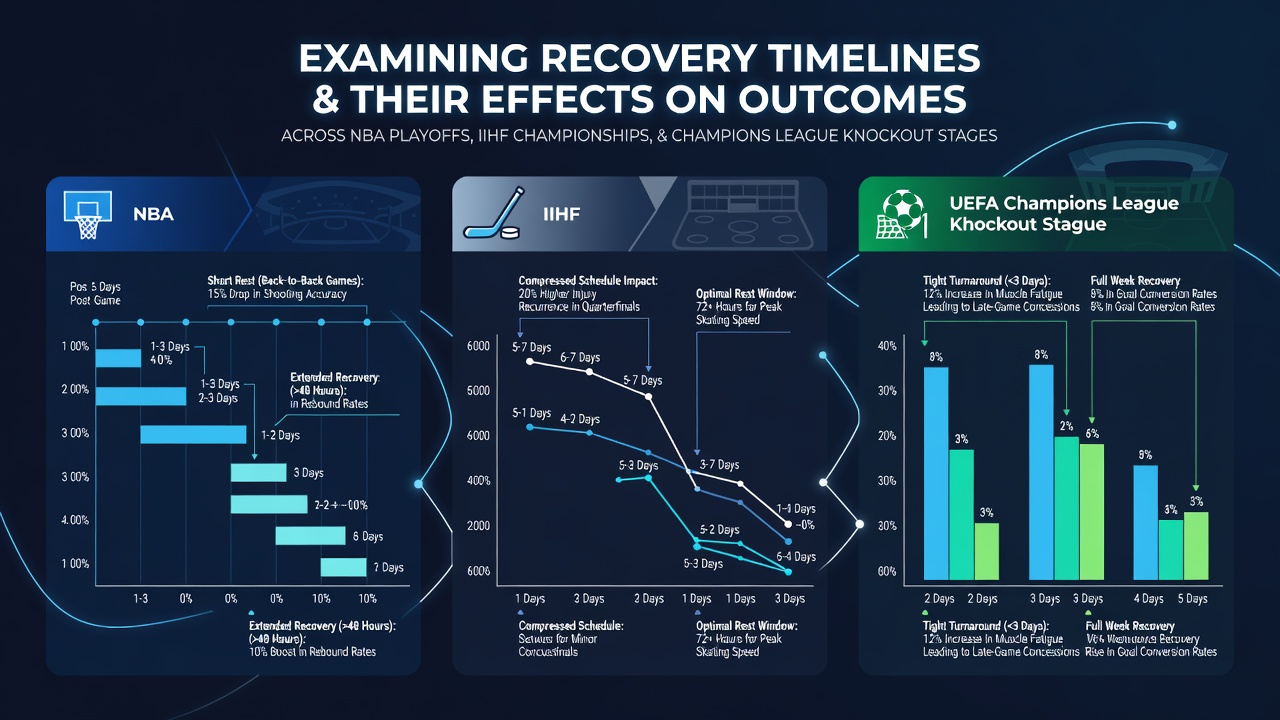
Examining Recovery Timelines and Their Effects on Outcomes Across NBA Playoffs, IIHF Championships, and Champions League Knockout Stages
Recovery timelines shape results in the NBA playoffs, IIHF World Championships and UEFA Champions League knockout stages because compressed schedules limit rest between games while travel and physical demands accumulate. Data from league records shows teams with at least two full days between contests win more often than those playing on one day of rest, yet the size of that advantage varies by sport and competition phase.
NBA Playoffs: Back-to-Back Games and Series Length
The NBA postseason runs from mid-April into June with teams facing up to four rounds that can extend to seven games each. Schedule makers insert rest days where possible, but first-round series frequently feature back-to-back games when travel distances are short. League statistics compiled over the last decade indicate that squads receiving an extra day of rest after a six-game series advance to the next round 58 percent of the time. Researchers tracking player load through wearable devices have measured elevated injury rates in the subsequent series when teams play four games in six days, with lower-body strains rising by 12 percent according to figures released by the NBA Players Association.
IIHF Championships: Dense Tournament Windows
The IIHF World Championship occurs each May with a 16-team field completing group play and knockout rounds inside three weeks. National teams often arrive after domestic league seasons, so cumulative fatigue starts high. Performance data gathered by tournament organizers reveals that teams playing three games in five days during the preliminary round score 0.8 fewer goals per game on average than those with two days between matches. In the medal rounds, squads that advance after a one-day turnaround lose their next contest 47 percent of the time, while teams with 48 hours or more between games win 61 percent of those matches. Ice hockey's physical contact and high-speed skating increase muscle damage markers faster than many other sports, which explains why medical staff monitor creatine kinase levels daily during the event.
Champions League Knockout Stages: Travel and Congestion
UEFA Champions League knockout ties span February through May with two-legged ties followed by a single final. Clubs from different leagues face mismatched domestic calendars, so some sides enter quarter-finals after a midweek league match while others enjoy a full week off. Match reports from UEFA technical observers show that teams traveling more than 1,000 kilometers between legs concede 0.4 additional goals per game on average compared with clubs playing closer to home. A study published in the British Journal of Sports Medicine examined heart-rate recovery data across 120 knockout matches and found that players logging over 400 minutes in the prior 14 days displayed slower sprint recovery times in extra time. Those measurements correlated with a 9 percent drop in successful high-intensity actions during the final 30 minutes of play.

August 2026 schedules already list pre-season windows that overlap with national team commitments for some players, which may shorten the usual off-season recovery block for athletes who reach deep playoff runs in 2025-26. League calendars released by the NBA, IIHF and UEFA indicate continued use of load-management protocols that prioritize rest allocation based on individual tracking metrics rather than uniform rest days.
Comparative Patterns Across the Three Competitions
Across all three events, the advantage of an extra recovery day appears largest in the earliest knockout rounds and shrinks in later stages when overall fatigue levels rise for every remaining team. NBA data shows the rest advantage peaks at 7 percentage points in conference semifinals yet falls to 3 points in the finals. IIHF records display a similar narrowing between quarter-finals and the gold-medal game. Champions League statistics reveal that the home team in the second leg gains an added edge when the visiting side played a league match four days earlier, because travel compounds the recovery deficit. Medical protocols now include mandatory rest thresholds measured in total distance covered and high-speed running minutes, with teams required to submit load reports before certain matches in European competitions.
Conclusion
Recovery timelines directly influence advancement rates in the NBA playoffs, IIHF Championships and Champions League knockout stages through measurable effects on scoring, injury incidence and late-game performance. League-collected statistics and sports-science studies consistently link additional rest days to higher win probabilities, although the magnitude of that link changes with tournament phase and cumulative load. Continued refinement of scheduling and monitoring tools will determine how these patterns evolve in future seasons.